













Accelerate feedback conversations with real practice
The most realistic way to practice professional conversations with AI.
Train your team, identify areas for improvement, and turn every simulation into a learning opportunity.
Trusted by leading companies worldwide


Improve your feedback conversations with real practice
Good feedback is not just about saying what went wrong or right, it’s about creating a constructive exchange of information that helps improve performance and strengthen relationships.
AI Role Play lets you practice both appreciative and corrective feedback conversations, fostering professional growth with greater clarity and confidence.
Training with measurable impact
Bring AI Role Play to every key moment of a feedback conversation
Giving good feedback means preparing, choosing your words carefully, and holding an open conversation, not delivering a monologue.
With AI Role Play, every simulation becomes an opportunity to work on how you prepare, frame, and sustain difficult or sensitive feedback conversations.
Trains you how to prepare the conversation, ask permission to give feedback, and lay the groundwork for a respectful and constructive exchange.
Practice how to explain the context, describe what you have observed, and separate facts from interpretations so the message is clearer and more objective.
Reinforces how to balance recognition of what is working with corrective feedback on what needs to improve, without damaging the relationship or undermining motivation.
Helps practice how to move from criticism to a joint exploration of solutions, identifying concrete actions to improve skills and results.
Allows you to practice how to show openness and receptiveness, listen to the other person's perspective, and adjust the feedback message based on their reaction.
Reinforces how to close the conversation by connecting the feedback to professional growth and next steps, rather than leaving it as a one-off correction.
The effects of better-practiced feedback conversation
AI Role Play transforms feedback training into a process that is more practical, confidence-building, and development-oriented.
Adapt each Role Play to your reality
From the profile of the interlocutor to objections, product, or language.
Each Role Play is tailored to the type of conversation you want to train.
Customize your avatar
Access a wide library of animated and hyper-realistic avatars and choose the format that best fits your training.
If you need something more specific, you can request a custom avatar for your company or use case.
Choose the ideal scenario
Explore different training environments and simulations to select the one that best aligns with your learning objectives, industry, and the type of conversation you want to practice.
From corporate settings to specific use cases, tailor each scenario to your company, team, or specific need to create more realistic and effective role-play experiences.
Build your AI Role Play step by step
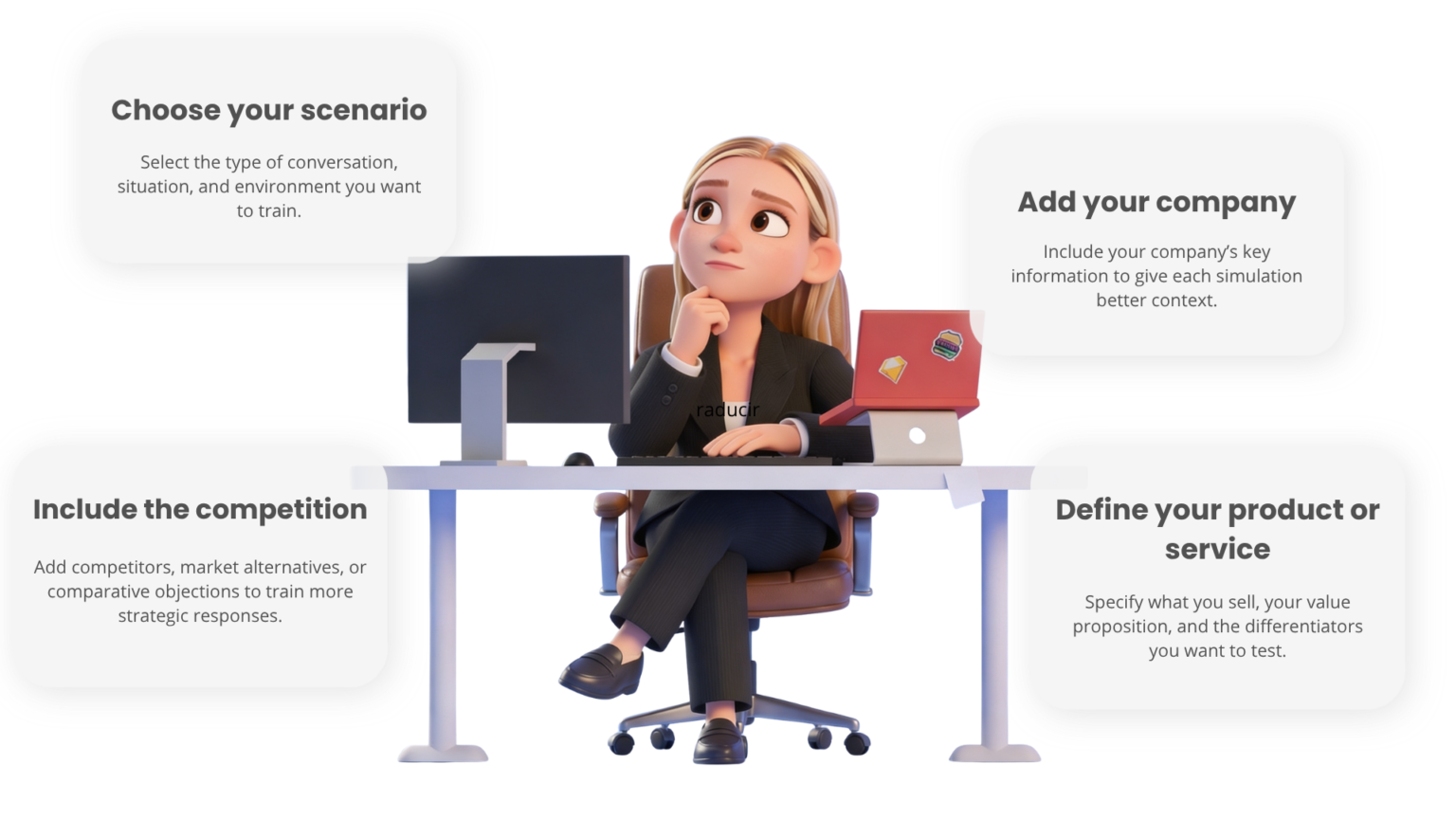
Choose the type of Role Play you want to train, from a discovery meeting to a product demo.
AI Role Play in multiple languages
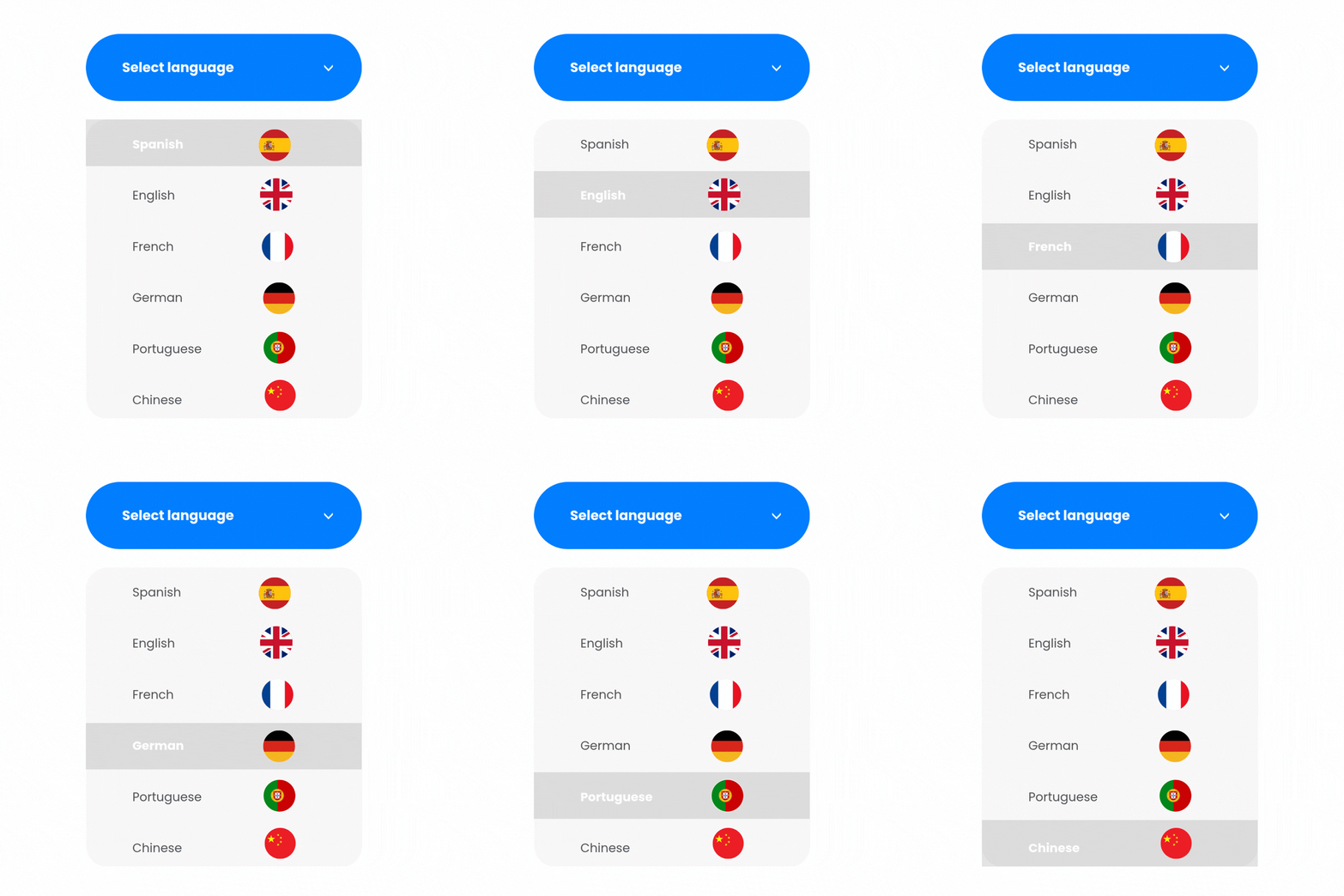
Adapt each role play to your team’s language to practice more natural and realistic conversations in any market.
Maintain the same quality of practice and evaluation across both local and international environments.
Instant, objective feedback
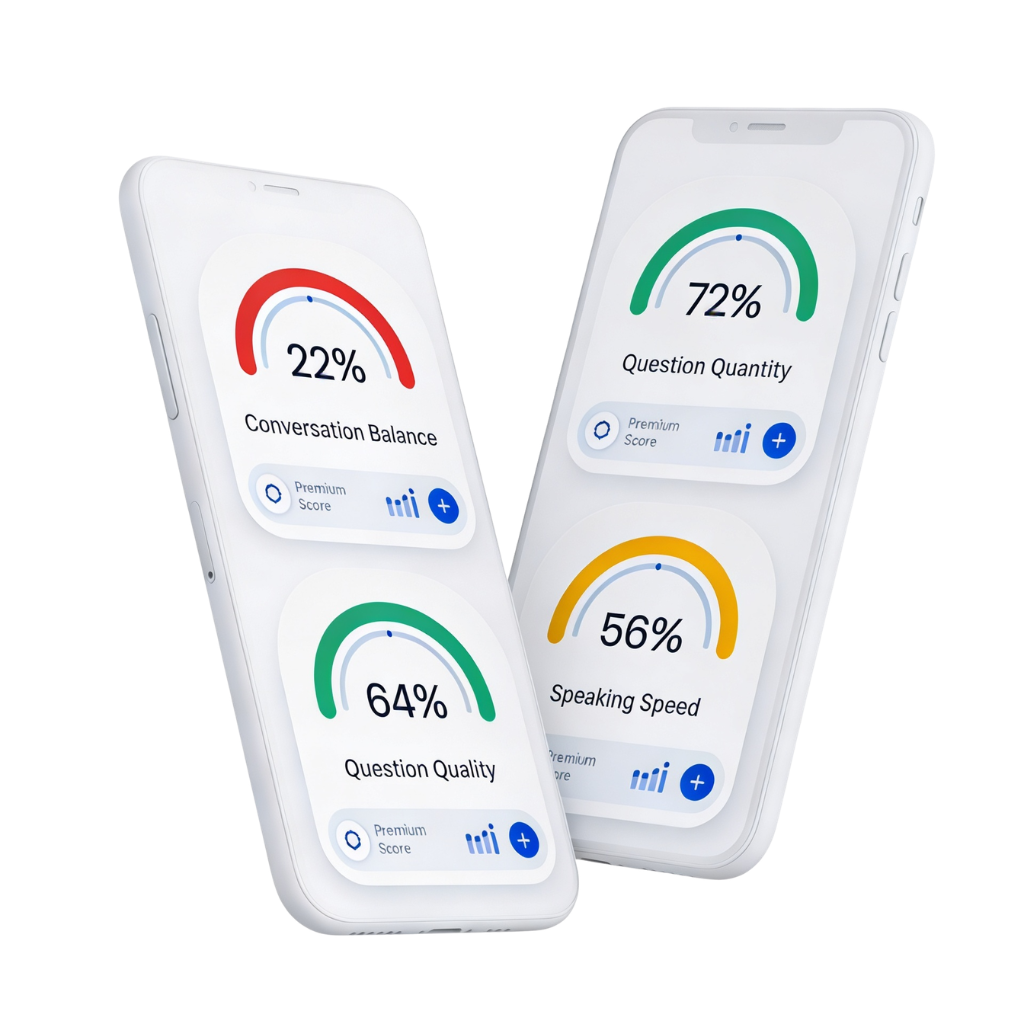
Get a clear analysis of each interaction to identify strengths, correct mistakes, and turn every simulation into an opportunity for improvement.
All supported by actionable metrics to track individual performance and team progress.
Bring AI Role Play to every key conversation
The most effective way to prepare your team for conversations where every decision matters
Sales onboarding
Accelerate new hires’ ramp-up so they can handle their first calls with confidence.
Presentations
Strengthen how ideas are delivered, questions are handled, and communication is executed with confidence.
Discovery calls
Improve qualification in every discovery call with more focused conversations.
FAQs
What is feedback in a conversation and why does it matter?
Feedback is the information we give about how we perceive another person’s behavior or work. It serves to reinforce what is working, correct deviations, and align expectations in day-to-day interactions.
What makes feedback in a conversation effective?
It is specific (based on concrete facts), respectful, and aimed at helping. It is timely, focuses on behavior rather than the person, and leaves room for the other person to respond.
What are the 4 types of feedback and how do they differ?
The most common types are positive feedback (reinforces successes), constructive or corrective feedback (suggests improvement), negative feedback (only criticizes), and mixed feedback (combines recognition and adjustment). They differ in tone and in whether they help the person improve or simply demotivate them.
What are the 4 steps to giving effective feedback?
Prepare the message, describe the specific situation, explain the impact it has had, and agree together on what will be done differently going forward.